
Lexington & Central Kentucky · 24/7
Mold Remediation
Containment, removal, and prevention by IICRC-certified technicians.
IICRC Certified
S500 / S520 standards
EPA Lead-Safe (RRP)
Certified renovator
Insurance Approved
Direct billing
BBB Accredited
Local & trusted
5.0 ★ Reviews
Lexington homeowners
Mold Remediation in Lexington and Surrounding Counties
Lexington' humid summers, snow-melt cycles, and the abundance of older homes with plaster-and-lath walls or finished basements create ideal conditions for mold. Most calls we get are reactive - homeowners discover staining behind baseboards, smell something musty in a basement, or fail a real-estate inspection.
Our IICRC-certified Applied Microbial Remediation Technicians (AMRT) follow the IICRC S520 Standard for Professional Mold Remediation. We don't just remove visible growth - we identify the moisture source, contain the work area to prevent cross-contamination, and verify clearance after remediation.
We're not a mold-testing lab and we don't perform our own clearance testing on the projects we remediate, which protects you from a conflict of interest. When third-party testing is required, we recommend an independent industrial hygienist.
- Mold inspection and air-quality assessment
- Containment with negative-air HEPA filtration
- Safe removal of contaminated materials
- Antimicrobial treatment of all surfaces
- Moisture-source identification and repair
Common Causes
What causes mold remediation in Lexington homes
Chronic basement humidity
Lexington basements routinely run 65-80% relative humidity in summer without active dehumidification - well above the 60% threshold where mold thrives.
Undetected slow leaks
A pinhole supply line, failed shower pan, or roof flashing leak can feed mold in a wall cavity for years before becoming visible.
Improper bathroom ventilation
Bath fans that vent into attic space (rather than outside) deposit moisture into insulation and dry to mold growth.
Ice dams & roof leaks
Repeated winter ice damming saturates attic decking and insulation.
Window condensation
Single-pane and aging double-pane windows in older homes drip onto sills and frames every winter.
Crawl-space moisture
Vented crawl spaces with exposed earth floors push humidity into the home year-round.
Warning Signs
How to tell you have a problem
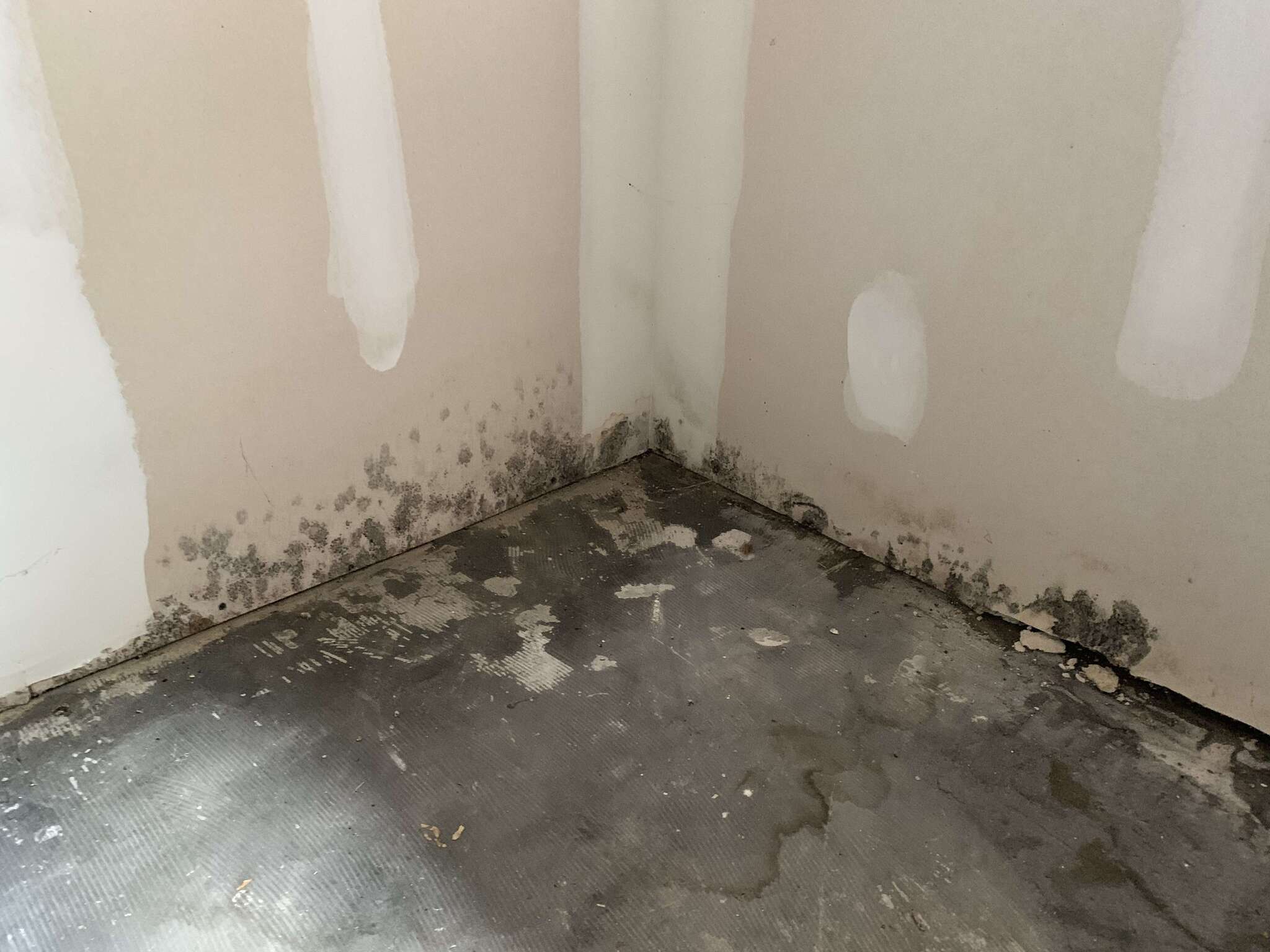
- Visible black, green, white, or pink growth on walls, ceilings, or framing
- Persistent musty or earthy odor
- Worsening allergy or asthma symptoms while at home
- Discoloration on drywall or behind furniture against exterior walls
- Peeling paint, bubbling wallpaper, or soft baseboards
- Recent water damage that wasn't professionally dried
What To Do Right Now
Before our crew arrives
- 1
Don't disturb visible growth
Brushing, scrubbing, or bleach-spraying mold releases millions of spores into the air and spreads the problem.
- 2
Reduce humidity
Run dehumidifiers and avoid adding moisture (no humidifiers, vent showers, run bath fans 30+ minutes after bathing).
- 3
Contain the area
Close doors to affected rooms. Avoid running HVAC if growth is near returns.
- 4
Find and stop the moisture source
Mold cannot grow without moisture. Removing growth without fixing the source guarantees it returns.
- 5
Get a professional inspection
Visible growth larger than 10 square feet, or any growth from a Category 3 water source, requires professional remediation per IICRC S520.
How It Works
Our Process
- 1
Inspect & test
Identify mold type, extent, and the moisture source feeding it.
- 2
Contain
Seal the area with plastic and negative-air HEPA scrubbers.
- 3
Remove
Safely demo and bag affected materials per IICRC S520 standards.
- 4
Treat & verify
Antimicrobial application and post-remediation verification.
On The Job
Recent mold remediation work in Lexington
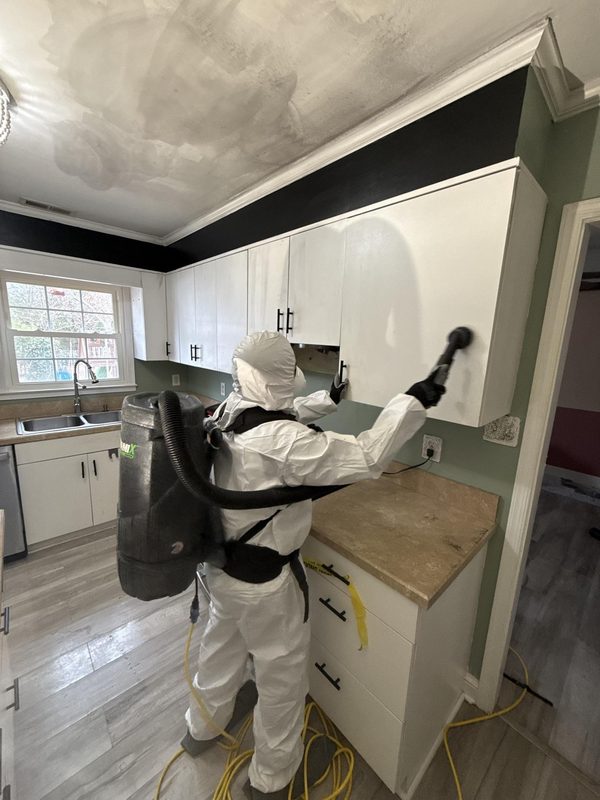
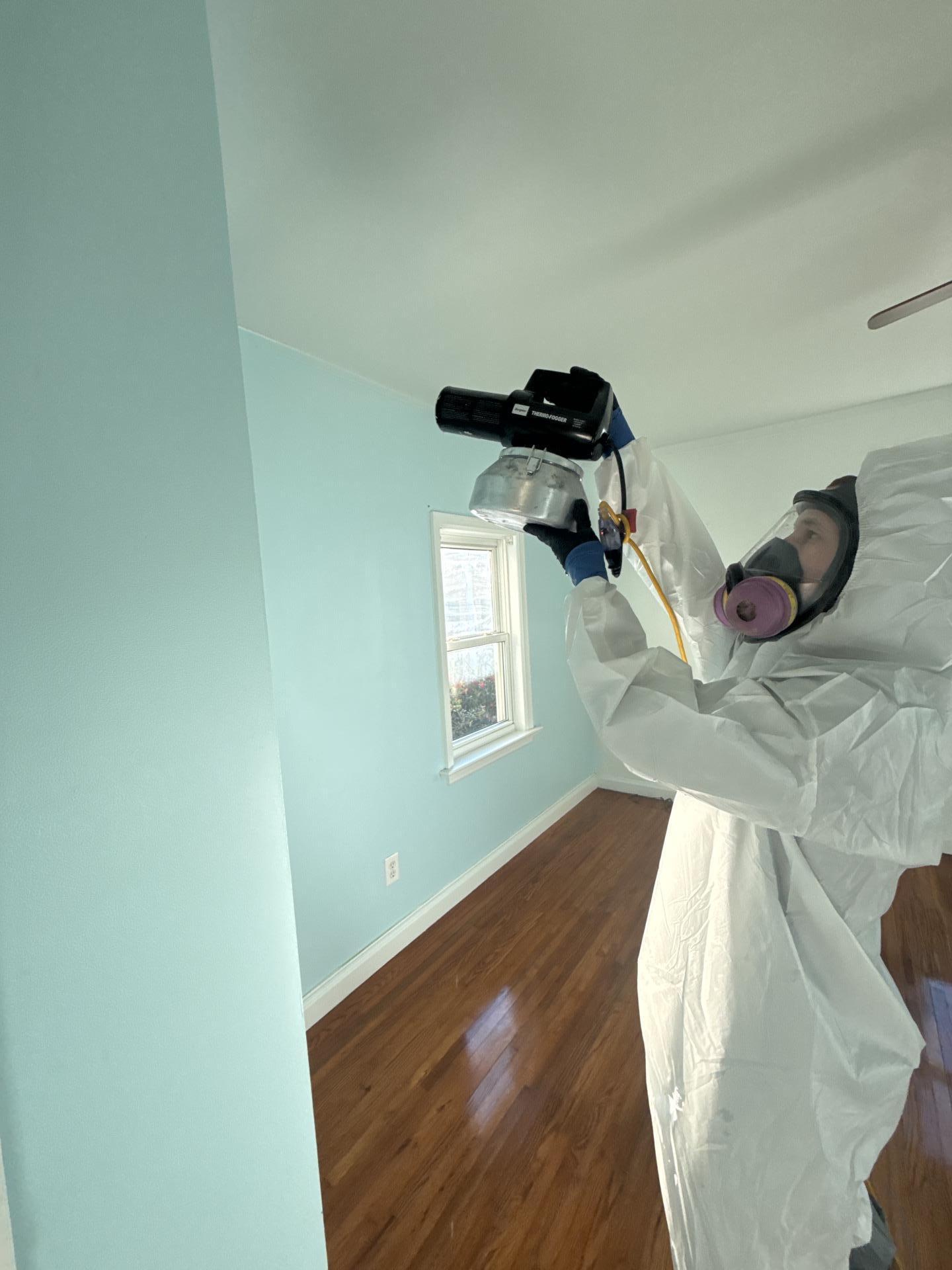
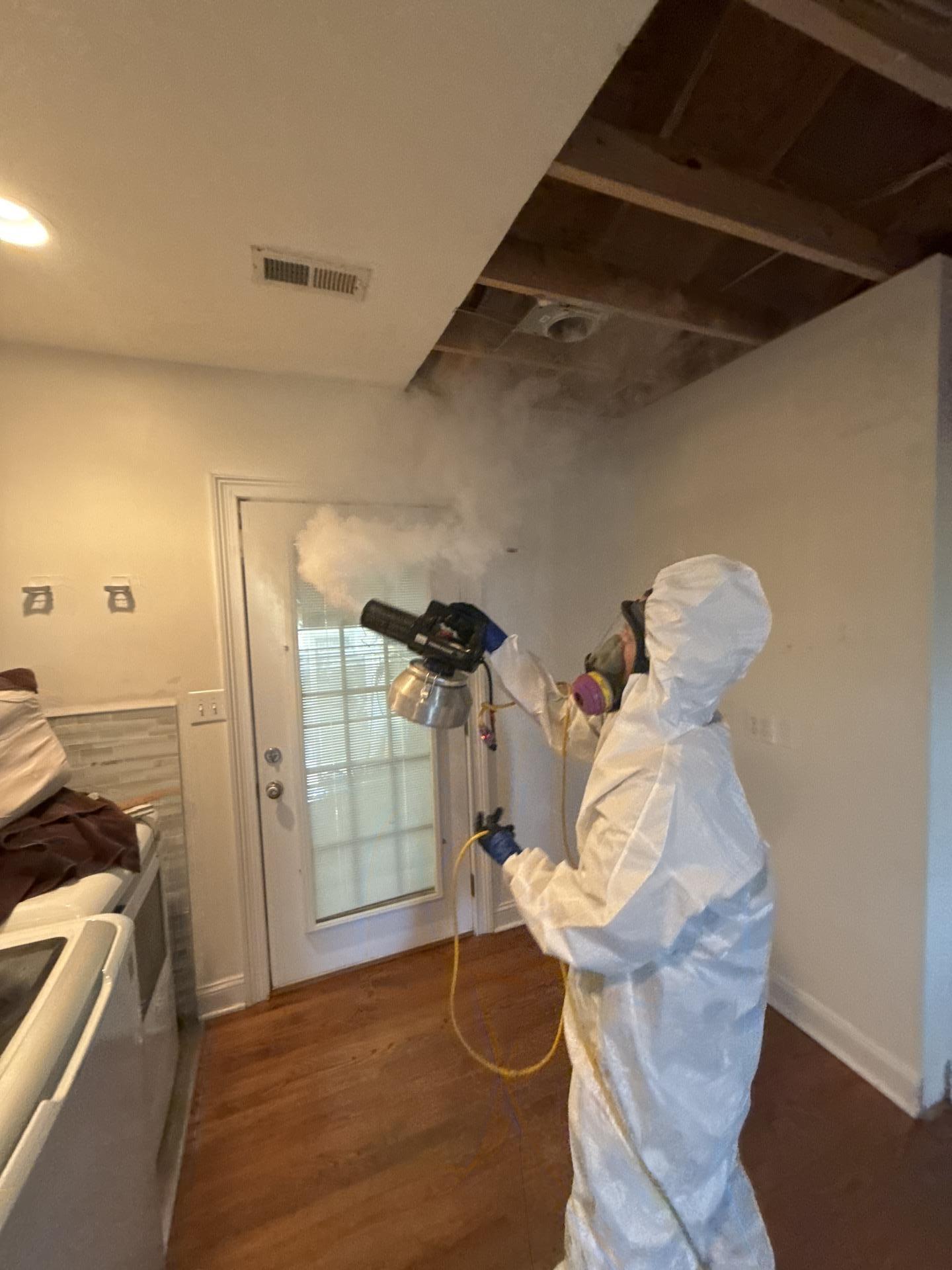
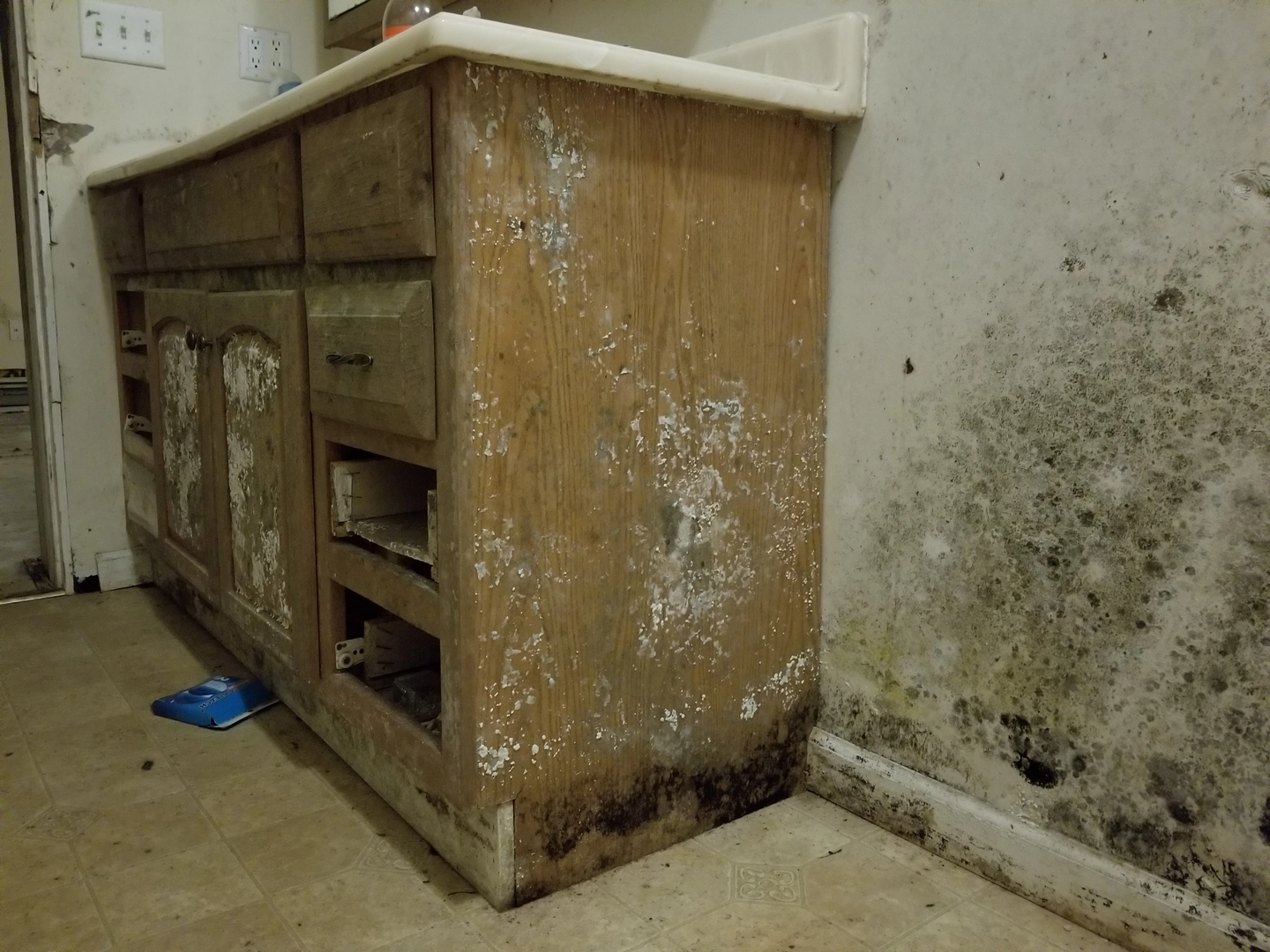
Real photos from IRS crews on job sites across Lexington and surrounding counties - not stock imagery.
Professional Equipment
The equipment we bring on every job
Consumer-grade tools won't reach professional dry standard or meet industry remediation requirements. Our crews arrive fully equipped from a Lexington-based fleet - no waiting on rented gear from out of town.
- Negative-air HEPA filtration scrubbers
- Six-mil polyethylene containment with zipper doors
- Personal protective equipment (full-face APR, Tyvek)
- HEPA vacuums certified for microbial work
- Moisture meters and infrared cameras
- EPA-registered antimicrobials and biocides
- Soda blasting and damp wiping for framing decontamination
Standards & Certifications
Held to documented industry standards
All projects follow the IICRC ANSI/IICRC S520 Standard for Professional Mold Remediation and reference the EPA's mold remediation guidance for schools and commercial buildings. We do not use bleach as a remediation tool - the EPA does not recommend it on porous surfaces, and IICRC S520 does not list it as an effective mold remediation product.
Local & Independent
Why Lexington homeowners choose a local restoration team
Lexington housing stock is unique - pre-war Isthmus homes, mid-century Westmorland and Sunset Village ranches, and newer subdivisions out by Verona and Sun Prairie all have characteristic moisture issues we see weekly.
We know which neighborhoods have the high water tables, which builders cut corners on bath-fan venting in the 90s, and how the Yahara chain of lakes affects basement humidity in lakeshore homes from Monona to Maple Bluff.
Insurance & Pricing
Direct insurance billing - and what to expect on cost
Mold caused by a sudden, accidental, covered loss (a burst pipe, a broken supply line) is typically covered up to a sub-limit. Long-term humidity issues, leaks the homeowner knew about, and flood-source mold are usually excluded.
We document the moisture source carefully, which often makes the difference between a covered and denied claim.
Typical project ranges
Small contained mold remediation jobs (one bathroom, a closet) start around $1,500. Large basement or whole-house projects with significant containment, demolition, and clearance can reach $10,000-$25,000+. We provide a written scope after inspection.
Related Services
Specialized mold remediation services
Sewage Backup Cleanup
Category 3 black water cleanup, decontamination, and structural drying.
Learn more →Flooded Basement & Crawl Space Cleanup
Pump-out, drying, and restoration after a flooded basement, garage, or crawl space.
Learn more →Ceiling Water Damage Repair
Find the leak, dry the ceiling, repair drywall - start to finish.
Learn more →Air Duct & HVAC Cleaning
NADCA-style cleaning to remove smoke, soot, and contaminants from ductwork.
Learn more →Service Area
Mold Remediation across Lexington and Surrounding Counties, KY
Locally dispatched from Lexington to every community in our service area.
Mold Remediation in LexingtonMold Remediation in NicholasvilleMold Remediation in RichmondMold Remediation in GeorgetownMold Remediation in WinchesterMold Remediation in VersaillesMold Remediation in FrankfortMold Remediation in DanvilleMold Remediation in BereaMold Remediation in ParisMold Remediation in CovingtonMold Remediation in Northern Kentucky
Other restoration services we offer
Insurance Carriers
We work directly with your insurance company
We bill most major homeowner and commercial carriers directly, including:

Don't see your carrier? We work with many more insurance companies across Kentucky. Call (859) 629-3406 to confirm yours.
FAQ
Mold Remediation FAQ
Additional resources
- EPA: A Brief Guide to Mold, Moisture and Your Home
- Kentucky DHS: Indoor Air Quality and Mold
- CDC: Basic Facts about Mold and Dampness
External links to authoritative agencies, standards bodies, and government resources.
Reviews
What Lexington Says About Us
5.0
Need restoration help right now?
We're available 24/7 across Lexington and surrounding counties. Call now or request a free estimate.